Museum of the Weird — “Faces”
Biola University - 11-Minute Short Episode
Role: Art Director
Project Overview
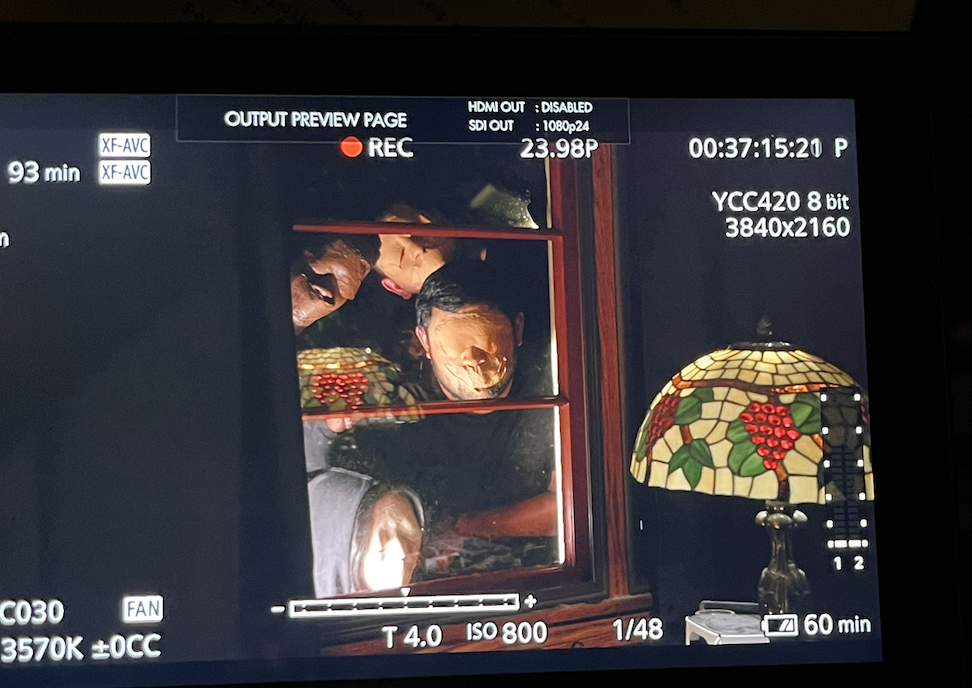
Museum of the Weird: Faces is an 11-minute horror short centered on two sisters left home alone for the night while their parents attend a formal dinner. What begins as an ordinary evening—watching TV and eating ice cream—quickly escalates into terror when an emergency broadcast warns of intruders in the area. As the night progresses, the girls begin noticing strange, ghostly faces staring through their windows, eventually realizing that something far more sinister may already be inside the house.
As Art Director, I worked closely with the production designer and director to shape the episode's visual world—transforming an ordinary suburban home into a tense, claustrophobic environment, where subtle design choices build suspense and unease.
Design Goals & Concept
The visual design of Faces relied on the contrast between familiar domestic comfort and growing intrusion. The house needed to feel safe, lived-in, and normal at the beginning of the film so that the gradual presence of the supernatural figures would feel increasingly disturbing as the story progressed.
Because most of the episode takes place in a single home at night, the art direction focused heavily on environmental control—especially around windows, lighting, and spatial layout.
Key design priorities included:
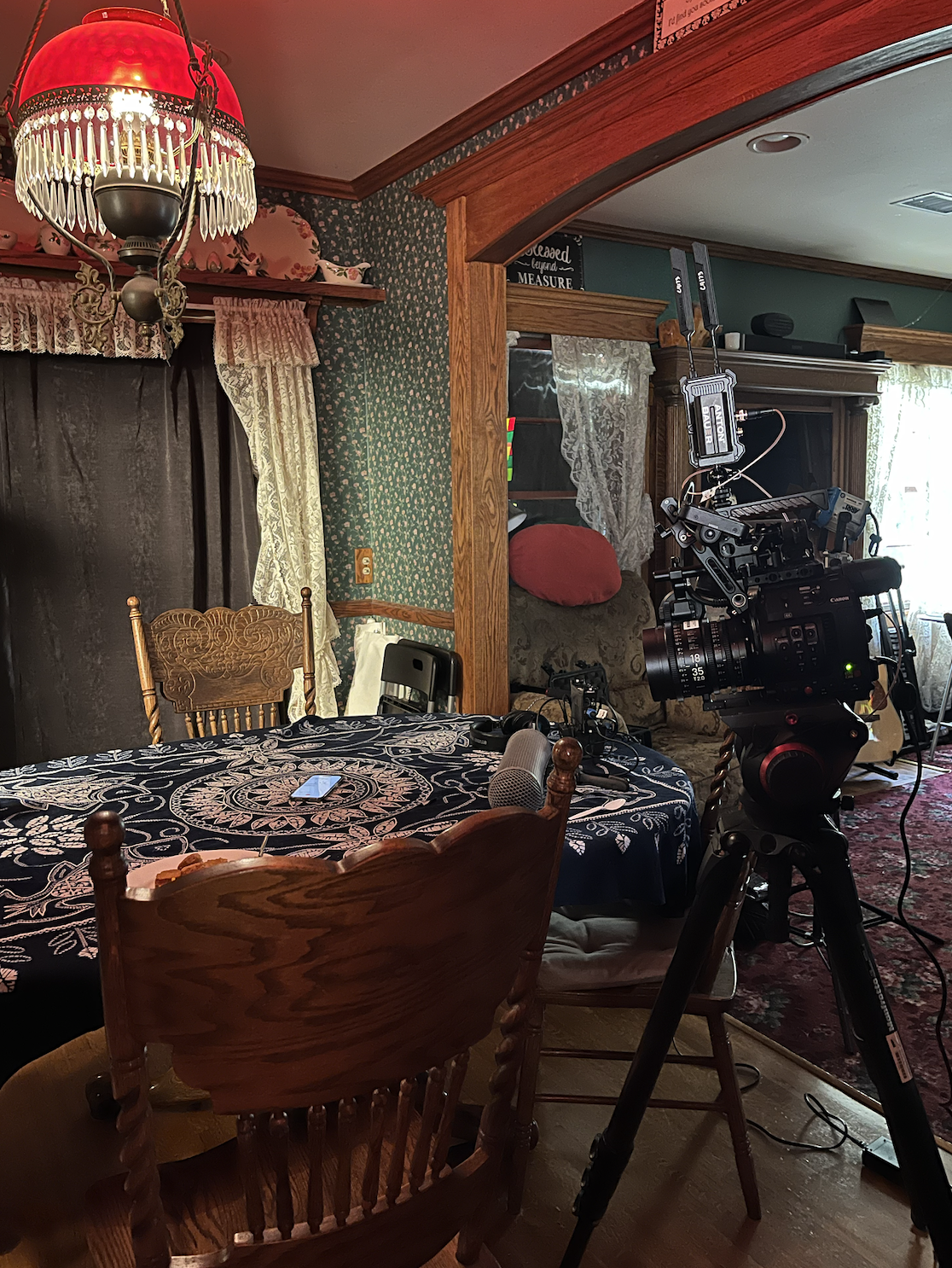
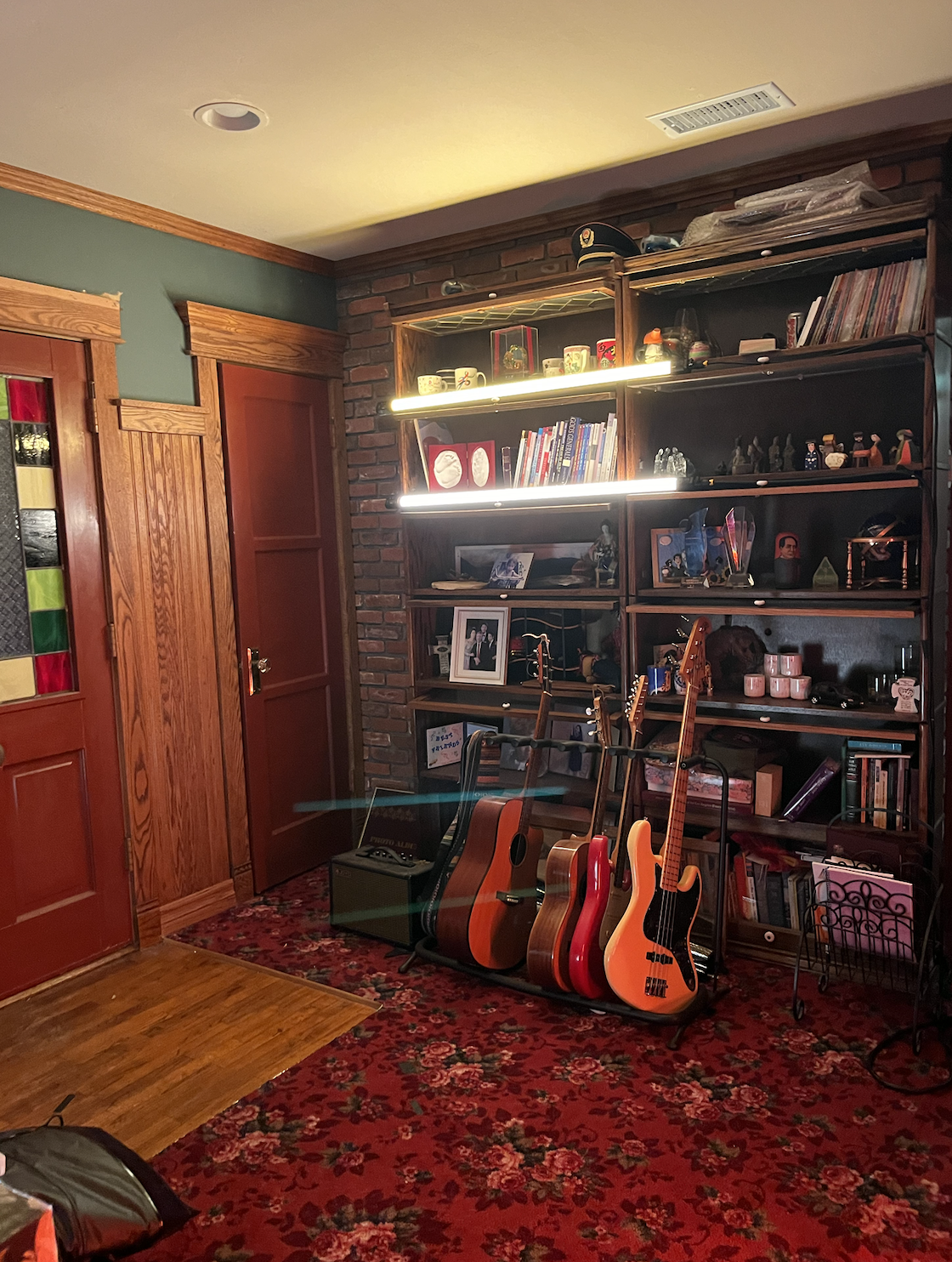
Creating a believable suburban family home through kitchen, living room, and entryway set dressing
Using windows, curtains, and blinds as major visual elements separating safety from the outside threat
Designing subtle environmental details that support tension without distracting from performances
Gradually shifting the tone of the space from comfortable to vulnerable as the story progresses
The presence of the mysterious faces becomes more unsettling because the interior environment feels so ordinary and familiar.
Responsibilities as Art Director
As Art Director, I oversaw the home's physical environment and coordinated the execution of the visual design throughout production.
My responsibilities included:
Supervising set dressing and prop placement across the kitchen, living room, and entryway locations
Coordinating visual continuity between scenes that take place throughout the night
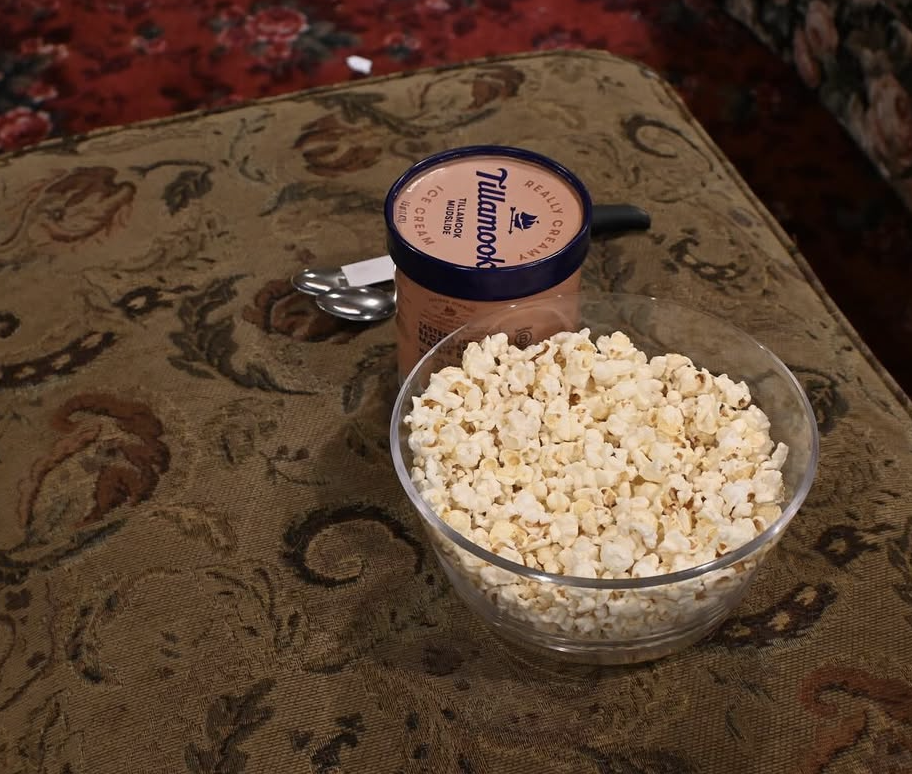
Designing and preparing key props used in the home environment, including dinner settings, living room objects, and handheld items used during the suspense sequences
Overseeing the preparation and placement of windows, curtains, and blinds that play a central role in the film’s tension
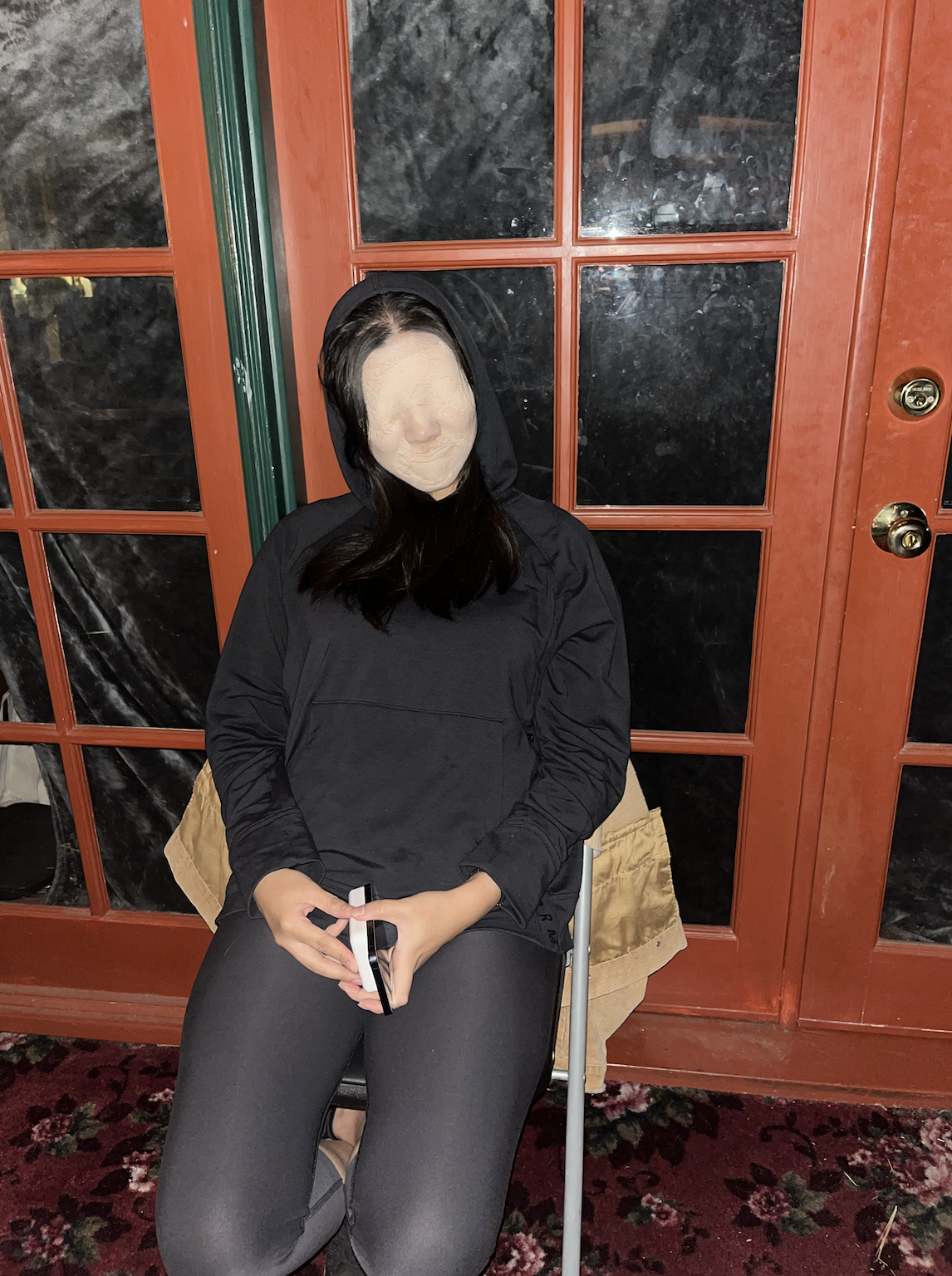
Assisting with the preparation and application of prosthetic face pieces used for the intruders seen outside the windows
Helping coordinate how the prosthetic faces interacted with lighting and camera framing to maintain their eerie, featureless look
Working with the art department to ensure the set supported blocking and camera framing for suspenseful moments
Maintaining a natural, lived-in feel for the home while adjusting environmental details to increase tension in later scenes
Because the story relies heavily on subtle visual shifts—such as curtains opening or figures appearing outside windows—the art department had to maintain careful control over every detail of the environmen
Final Result
The final episode uses a simple domestic setting to build a slow sense of dread. Through controlled art direction and careful environmental design, the house transforms from a familiar family space into a vulnerable setting where the characters realize they may no longer be alone.
The addition of practical prosthetic faces helped create a disturbing visual motif that made the figures on the outside feel unnatural and unsettling, without relying on heavy digital effects.
Working as Art Director on Faces involved shaping both the environment and practical elements that allowed the suspense to unfold—supporting the horror through intentional set dressing, prop design, and practical effects.
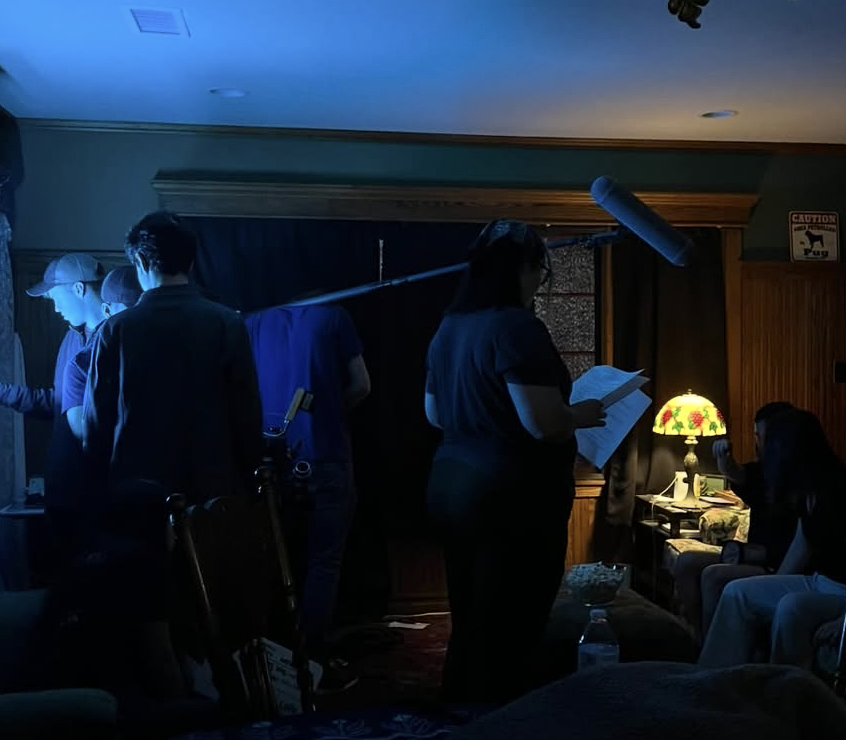
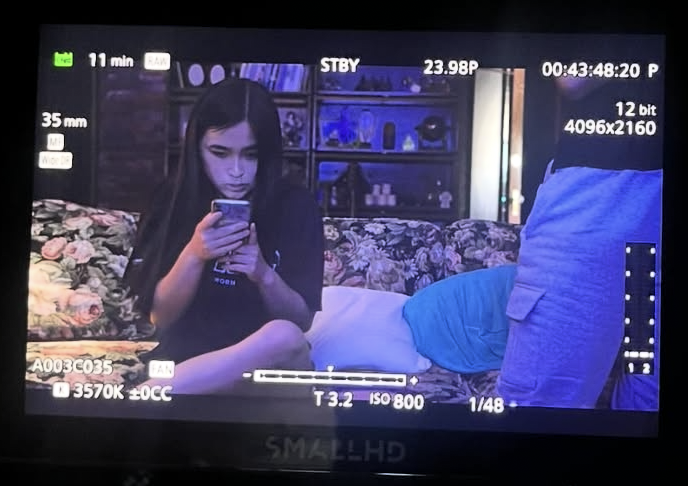
Below are location scouting photos, prosthetic preparation, set dressing references, production stills, and behind-the-scenes images documenting the art department’s work throughout the production.